
Understanding College Stress

The Student Who "Has It All Together" Might Be Struggling Most.
Good grades, a full calendar, and a steady smile do not rule out anxiety, depression, or burnout. Here is what stress can actually look like, and how to start a conversation.
A student can look like they are keeping up and still feel like they are barely holding on. Classes, work, money, relationships, family pressure, identity, health, and the future can all pile up at once.
College stress is not limited to students with low grades. Someone with a strong grade point average, a full calendar, and a smiling face can still feel overwhelmed. Stress can affect anyone, including student athletes, first-generation students, transfer students, students far from home, and people who seem “fine” from the outside.
This article is informational and not a substitute for care from a qualified mental health professional. If there is immediate danger, call 911 or go to the nearest emergency room.
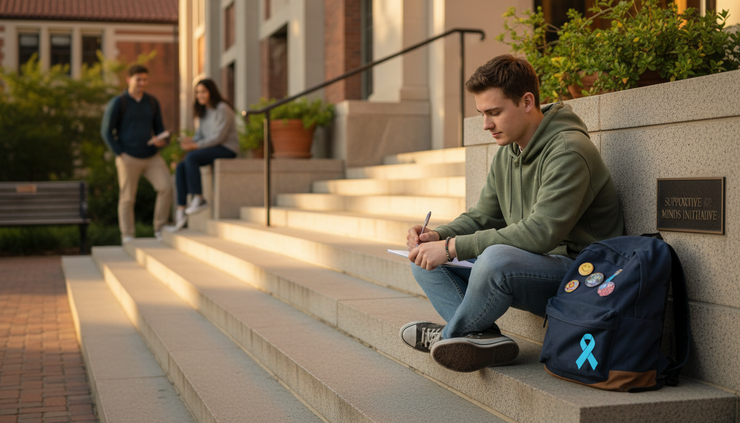
Stress does not always look like falling behind
People often picture a stressed student as someone missing every deadline or failing exams. That can happen, but it is only one version of the story.
Stress can also look like:
Getting good grades but feeling constant panic before every assignment
Saying yes to too many clubs, shifts, practices, or social plans
Feeling guilty for resting
Comparing every choice to what everyone else seems to be doing
Feeling pressure to make family proud
Hiding emotions because “other people have it worse”
Some students push harder when they feel stressed. They study more, work more, train more, or stay busier. From the outside, that can look like success. Inside, it may feel exhausting.
Stress becomes harder to manage when there is no time to recover. Sleep gets shorter. Meals get skipped. Texts go unanswered. Small problems feel huge. Over time, the body and mind start sending clearer signals that support may be needed.
Signs a student may need support
There is no single sign that proves someone is struggling. A pattern matters more than one bad day. If changes last for more than a short stretch, or they start to affect daily life, it may be time to reach out.
Changes in mood
Mood changes can show up in different ways. Some people cry more often. Others feel numb, irritated, angry, or easily overwhelmed.
Signs to notice include:
Snapping at friends or roommates over small things
Feeling empty or disconnected
Losing interest in things that used to feel good
Feeling hopeless about the future
Having panic, dread, or racing thoughts
Stress can also make a person feel unlike themselves. That can be scary, especially when there is pressure to act normal.
Changes in sleep and energy
Sleep is often one of the first things to shift. Some students can't fall asleep because their mind will not slow down. Others sleep much more than usual and still wake up tired.
Common signs include:
Staying up most nights, even when tired
Sleeping through classes or plans
Feeling exhausted after normal tasks
Needing caffeine just to function
Having headaches, stomach issues, or body tension during stressful weeks
Changes in sleep don't mean someone is doing something wrong. They are often a signal that the body is under strain.

Changes in social behavior
Stress can affect how people connect. A student may pull away because they feel drained, embarrassed, or afraid of being a burden. Others may stay surrounded by people to avoid being alone with their thoughts.
Watch for:
Canceling plans again and again
Avoiding calls or messages
Eating alone more often than usual
Losing interest in clubs, sports, or faith groups
Acting unusually risky or out of character
Saying things like “I can’t do this anymore”
Isolation can make anxiety and depression feel heavier. Connection does not fix everything, but it can make it easier to take the next step.
How to start a conversation without making it awkward
Talking about mental health can feel uncomfortable at first. Many people worry they will say the wrong thing. A caring, simple question is often better than silence.
Try starting with something specific:
“I noticed you haven’t been sleeping much. How are you really doing?”
“You seem quieter than usual. Do you want to talk?”
“I care about you, and I’m glad you told me.”
“Would it help if I walked with you to the counseling center?”
“You don’t have to explain everything right now. I can just sit with you.”
The strongest support often sounds calm and ordinary. Listen more than you speak. Avoid jumping straight into advice. Try not to compare their stress to someone else’s.
If the person says they are thinking about hurting themselves, take it seriously. Stay with them if possible, contact emergency help, or call or text 988 in the United States to reach the Suicide and Crisis Lifeline.

Where to get help on or near campus
Help does not have to start with a perfect plan. It can start with one message, one walk-in visit, or one honest sentence.
Places to turn include:
Campus counseling center Many colleges offer short-term counseling, same-day support, or help finding care nearby.
Student health center Physical symptoms like sleep loss, appetite changes, headaches, or stomach pain can be connected to stress.
A trusted instructor or advisor They may help with class concerns, extensions, or connecting with campus support.
Resident assistant or housing staff For students living on campus, housing staff often know how to help after hours.
Dean of students or student support office These offices often help when stress affects attendance, safety, housing, or basic needs.
988 Suicide and Crisis Lifeline Call or text 988 any time in the United States if there is a mental health crisis or fear of self-harm.
Crisis Text Line Text HOME to 741741 in the United States to connect with a trained crisis counselor.
Students in large universities, small colleges, community colleges, and rural campuses may have different options. In places such as Montana, Arizona, and Tennessee, support may include campus services, local clinics, online counseling, or state and county mental health resources.
Asking for help is a smart response to pressure
Needing support does not make someone weak, dramatic, or unprepared for college. It means the stress has gotten heavy enough that carrying it alone is no longer working.
A good first step can be small:
Send one message to a friend
Write down what has changed
Make an appointment with campus counseling
Tell a professor, “I’m having a hard time and need help figuring out next steps”
Call or text 988 if things feel unsafe (or call 911/go to the nearest ER)

No one has to wait until everything falls apart. Stress deserves attention before it becomes a crisis. A conversation, an appointment, or a call can be the first move toward feeling steadier, clearer, and less alone.


Comments